top of page

How to Apply for the EB-2 NIW Visa Without a Lawyer: Updated 2026 Guide

This presentation accompanies our video How to Apply for the EB-2 NIW Visa Without a Lawyer: Updated 2026 Guide. Here you will find an in-depth analysis of what USCIS evaluates in an EB-2 NIW petition, including the proposed endeavor, substantial merit, national importance, and the evidence needed to demonstrate that the petitioner is well positioned.


Full Video Analysis: Visa EB-2 NIW Without a Lawyer

Did you land on this page directly? Watch the video to understand the context behind each slide.


Supporting Slides

Review the key concepts explained in the video through this educational presentation.


Cover of the 2026 educational guide about the EB-2 NIW visa
1. The Challenge of the EB-2 NIW Visa

Understanding what USCIS evaluates is the first step toward preparing an EB-2 NIW petition on your own.


USCIS criteria for evaluating an EB-2 NIW petition
2. USCIS Guidance Versus What You Present

USCIS examines the proposed endeavor, its substantial merit and national importance, and the evidence showing that the petitioner is well positioned.


EB-2 NIW approval rates and the importance of supporting evidence
3. Can an EB-2 NIW Petition Still Be Approved?

The EB-2 NIW remains an opportunity, but presenting a clear and well-supported petition is increasingly important.


Elements required to define the proposed endeavor
4. What Does USCIS Look for in the Proposed Endeavor?

The petitioner should explain what they propose to do, the problem they intend to address, and the mechanism they will use.


Difference between an occupation and a proposed endeavor
5. A Profession Is Not a Proposed Endeavor

Simply describing an occupation is not enough. USCIS looks for a specific project connected to a concrete problem and plan.
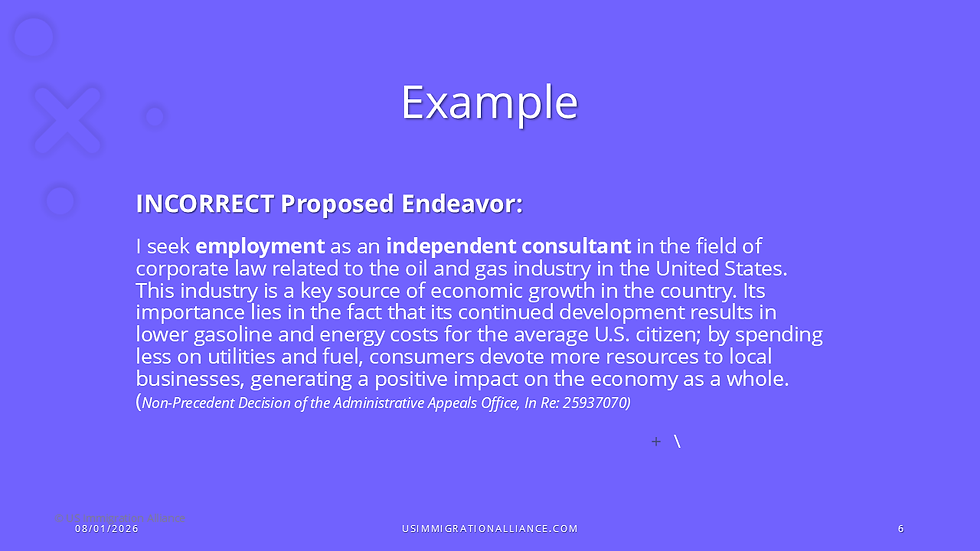


Example of an incorrectly defined EB-2 NIW proposed endeavor
6. Example of an Incorrect Proposed Endeavor

Seeking employment or describing the general importance of an industry does not adequately identify a specific project.


Example of a clearly defined EB-2 NIW proposed endeavor
7. Example of a Clearly Defined Proposed Endeavor

A stronger statement identifies the proposed solution, who will benefit, and the specific problem the project intends to address.


Difference between substantial merit and national importance
8. Substantial Merit and National Importance

The importance of a field does not automatically establish that a specific project has national importance.


Evidence showing that the petitioner is well positioned
9. Being Well Positioned Requires Evidence

Relevant experience, progress, results, and interest from third parties may help demonstrate the ability to advance the project.


AAO case analysis involving artificial intelligence software
10. Analysis of an AAO Case

Claims involving artificial intelligence, productivity, employment, or economic growth must be supported and directly connected to the proposed project.


Evidence needed to demonstrate prospective national impact
11. Projections Must Be Supported

USCIS may examine the expected impact, the basis for the projections, the anticipated timeframe, and who can validate those projections.


Questions about substantial merit, national importance, and evidence
12. The Central Questions in an EB-2 NIW Petition

Does the proposed endeavor have substantial merit and national importance, and is there sufficient evidence supporting the project and its expected impact?


NIW processing times and approval rates
13. EB-2 NIW Processing Times and Statistics

Processing times and approval rates help explain the current landscape, but they may change over time.


Conclusion about developing an EB-2 NIW petition strategy
14. Analyze Your Strategy

Understanding USCIS criteria can help you organize the information and evidence included in a petition.


Closing slide of the educational EB-2 NIW presentation
15. The First Step Is to Begin

Studying official sources and turning your ideas into a clear project are essential parts of the process.


This material is provided for educational and informational purposes only. It is not legal advice and does not guarantee any particular result. It was prepared using public USCIS sources listed below.


1. USCIS Policy Manual, Volume 6, Part F, Chapter 5 — Advanced Degree or Exceptional Ability
2. USCIS Policy Alert PA-2025-03 (January 15, 2025) — Second Preference Eligibility for National Interest Waiver Petitions
3. Matter of Dhanasar, 26 I&N Dec. 884 (AAO 2016)
4. Remzi Güvenç Kulen, “What the New NIW RFEs Are Really Asking For,” AILA Think Immigration (July 21, 2026)
5. USCIS AAO Non-Precedent Decision, March 31, 2023 — MAR312023_01B5203 (identified in the presentation as In Re: 25937070)
6. USCIS AAO Non-Precedent Decision, June 25, 2026 — JUN252026_02B5203
7. USCIS — How Do I Request Premium Processing?
8. USCIS Form I-907 Instructions
9. USCIS Case Processing Times
10. USCIS AAO Non-Precedent Decisions Repository
11. USCIS — Immigration and Citizenship Data


Comments


We use your information only to contact you.
We strive to make this site accessible to all.
By using this site, you agree to our terms.

  • Youtube
  • Instagram
  • TikTok
  • Facebook

This content is provided for informational and educational purposes only and does not constitute legal advice. USIA is not a law firm.


© 2026 by US Immigration Alliance. All rights reserved.

bottom of page